
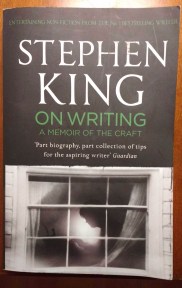
Stephen King’s ‘On Writing – A Memoir of the Craft’ is regularly cited as a must-read book for would-be authors. So I’ve read it. And here are the key lessons I’ve taken from Mr. King, listed under two of the same section headings he uses within the pages of his book.
C.V.
- Your job isn’t to find ideas but to recognise them when they show up in your head (see point 19).
- When you first write a story, you’re only telling yourself the story. It’s yours – warts and all. When you’ve finished rewriting a story, it belongs to everyone else – so you’d better take out the warts.
- Good writing can be both “intoxicating and idea-driven”.
- Writing stories has as much in common with sweeping the floor as moments of revelation.
- “Writing is a lonely job. Having someone who believes in you makes a lot of difference.”
- There is no excuse to ever stop writing – even when you’re a sad alky or have been hit by a truck, keep writing.
- Take writing seriously. Not yourself.
- “The word is only the representation of the meaning; even at its best, writing almost always falls short of full meaning.” So you’d better find the closest word if you wanna get heard.
- Learn about gerunds…
- …but not every line has to be grammatically correct.
- KISS for the sake of the reader. Therefore, two thoughts = two sentences.
- Accept it: you will write badly at times and fail with your rewriting occasionally. Even the good authors are bad in places.
- Writing is talking and talking is seduction. You’re trying to get the reader to dive under the covers… of your book.
Writing
- The muse with the bag of magic fairy dust will only open it and sprinkle a little in your direction when you graft.
- Read.
- Don’t watch telly.
- Read and write 4-6 hours a day (gulp!)
- Shut the door until you achieve your daily writing goal. Lock it if you have to with a ‘disturb and die’ sign on the outside. Eliminate every distraction – mobile, internet, windows etc. Find your ‘zone’, which could mean plugging into your iPod.
- Your other job is to “find the truth inside the story’s web of lies” (read point 1 if you haven’t already).
- Characters must do things their way. Let them surprise you. Allow them to complicate matters.
- Describe what you want the reader to experience.
- Don’t break the narrative spell – keep the ball rolling.
- Let your characters speak freely – express the truth (there’s that word again – see point 19) of how people really act and talk. Don’t self-censor.
- Can the theme of your story (its deeper meaning) enrich the 2nd draft?
- 2nd draft = 1st draft – 10%
- You really must know the market before submitting.


One thought on “Stephen King’s ‘On Writing’ – what I have learned”